

The Supreme Court Didn't Kill AI Governance — It Exposed What We've Been Getting Wrong
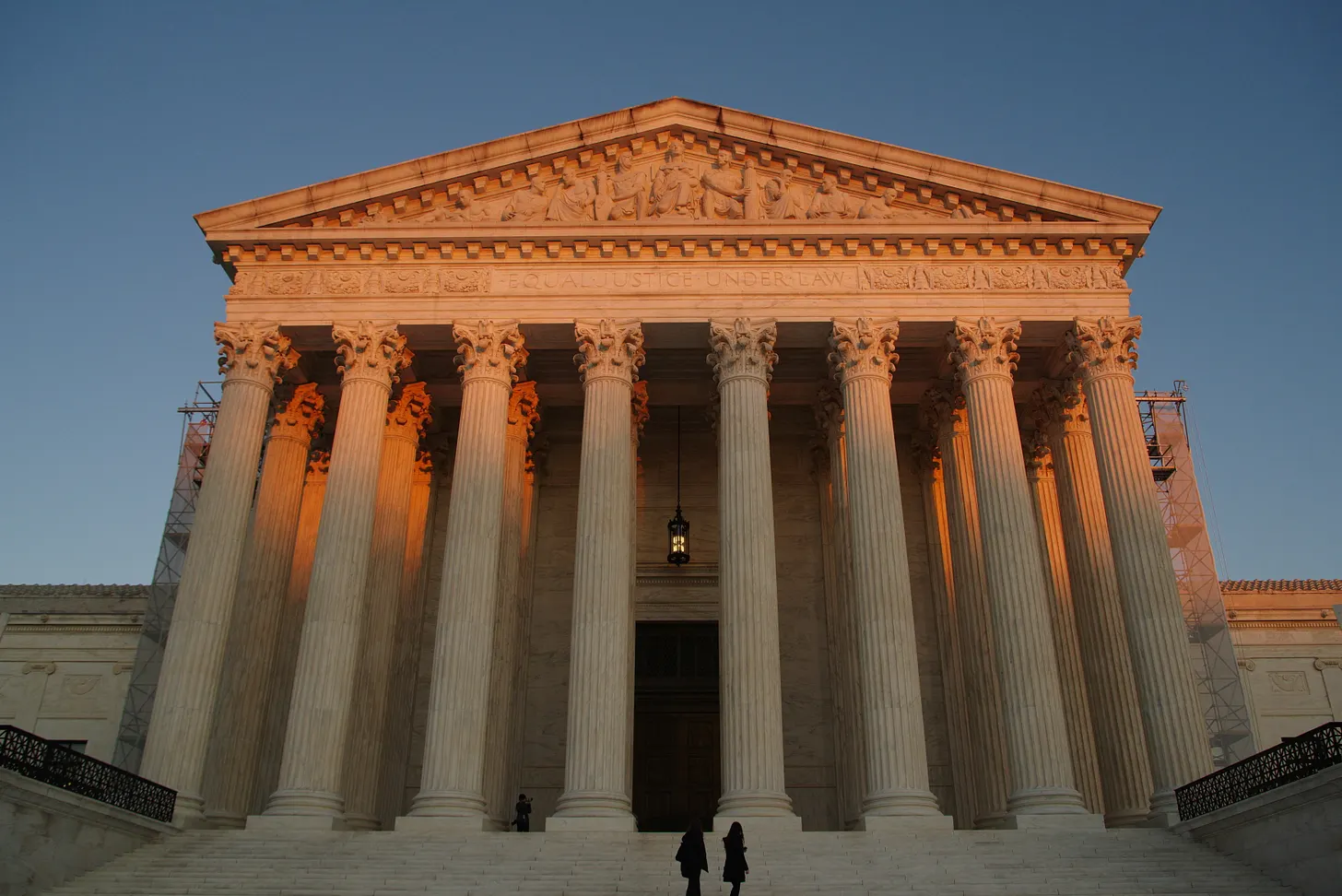
Andrew Freedman published a thoughtful essay last week arguing that the Supreme Court's decision in Slaughter didn't kill AI governance—it clarified where different parts of it belong. His central point is that we should stop trying to insulate regulators from politics and instead insulate the technical work of evaluating AI systems.
I think he's right.
But after I read it, I found myself circling a different question.
Not just what Slaughter means for AI governance (yes, that), but what it says about democracy in the age of AI.
For decades, we've comforted ourselves with the idea of the "independent agency." Protected commissioners. Fixed terms. Expert judgment somehow insulated from politics. The Supreme Court didn't just weaken that vision. It questioned whether it was ever constitutionally coherent in the first place.
That's a big deal for AI.
But I don't think the real lesson is about AI alone.
I think it's that, like a room full of management consultants, whiteboards, and too many multi-colored sticky notes, we've been trying to solve constitutional problems with organizational charts.
Every major proposal for AI governance eventually runs into the same debate. Should there be a new federal agency? An AI commission? An expert board? An international regulator? Some independent body capable of rising above partisan conflict and making objective decisions on behalf of everyone else?
And I get it. The instinct makes sense.
If the technology is complicated enough, maybe the solution is simply to hand it to experts.
But constitutional democracies don't work that way.
We should know by now that they can't.
The challenge has never been finding the perfect institution. The challenge is building institutions that remain legitimate after elections change, administrations turn over, and reasonable people disagree about what AI should be allowed to do.
That's not an organizational problem.
It's a constitutional one.
Constitutional government has never depended on eliminating politics. It depends on building systems that allow politics to happen without destroying public trust.
Think about the institutions we already rely on (none of which are perfect by any means).
Scientific research doesn't earn credibility because scientists are above politics. It earns credibility because methods are published, evidence is scrutinized, experiments can be replicated, and conclusions can be challenged.
Financial audits don't work because auditors are magically impartial. They work because there are standards, oversight, professional consequences, and competing firms checking one another's work.
Courts don't exist because judges have no political views. They exist because we have procedures, precedent, appeals, ethics rules, public opinions, and multiple layers of review.
Their legitimacy doesn't come from pretending that humans are unbiased (we know they're not). It comes from designing systems and safeguards that make bias easier to detect and harder to hide.
That's why Andrew's argument about separating technical verification from political decision-making is so compelling.
Understanding what an AI system can do is fundamentally different from deciding what society should do about it. One is a scientific question. The other is a democratic one.
We should absolutely build institutions capable of producing trustworthy technical evidence. Independent verification organizations may prove to be an important part of that ecosystem (Like Fathom, I think that they will be).
But once you start thinking this way, another question immediately follows. Or, in the words of Carrie Bradshaw, "I couldn't help but wonder..."
Who governs the institutions that govern AI? Who accredits the evaluators? Who updates the standards? Who audits the auditors? Who decides when the evidence is good enough to justify action? Who ensures those institutions remain worthy of trust twenty years from now—not just under one administration, but under five?
Those aren't just implementation details. They're the governance challenge, and dare I say, the whole ballgame.
Lately, I've found myself reaching for a phrase to describe what I'm really talking about: constitutional infrastructure.
I'm still working through exactly what I mean by it (and look, I know that the last thing the world needs right now is another politically jargon term), but the rough idea is this: democracies don't just need good laws. They need durable institutions, norms, and accountability mechanisms that remain legitimate even as politics changes. The Constitution gives us a framework for governing ourselves. Constitutional infrastructure is everything we build to make that framework actually work.
But the more I think about it, the more I think there's one piece missing from almost every conversation about AI governance.
The public.
Not as an audience.
Not as stakeholders.
Not as participants in a listening session or commenters on a proposed rule.
As governors.
One of the habits we've fallen into—across government, philanthropy, and increasingly AI—is treating public participation as though it were the same thing as public authority.
Deep down, we all know that it isn't.
A town hall isn't self-government.
A comment period isn't democratic accountability.
A survey or another poll isn't shared power.
Democracy asks more of us than offering our opinions. It gives us durable roles in governing ourselves. We vote. We serve on juries. We challenge government actions in court. We organize. We investigate. We hold officials accountable. We build civil society. We create institutions that outlast any one administration or political moment.
If AI is becoming part of the infrastructure through which society makes decisions (and reader, we know that it is), then we need to ask a harder question than whether experts can evaluate it fairly.
We need to ask how the public governs the institutions that evaluate it.
How are standards challenged?
Who gets to participate in setting them?
What happens when communities disagree with expert consensus?
How do we ensure that technical expertise informs democratic decision-making without replacing it?
Those questions don't have easy answers.
I certainly don't have them yet (and I'd be skeptical of anyone who claimed they did).
But I have a growing suspicion that this is where the next generation of AI governance will either succeed or fail.
The debate isn't ultimately about whether agencies are independent. It's about whether the institutions we build deserve democratic legitimacy.
That's a much higher bar. And it requires something we've spent surprisingly little time discussing: not just how we govern AI, but how we govern the governors.
That's the conversation I hope we start having next.
This is the first in a series of Field Notes exploring what I've started thinking of as constitutional infrastructure for AI governance.
