
10 observations from ASCEND 2026 about storytelling, optimism, and the people building what comes next
We want to let you in on a little secret.
Usually, we're the people behind the booth.
We're helping organizations shape the story. Designing the exhibit. Building the experience. Writing the messaging. Printing the collateral. Launching the website. Figuring out how to make incredibly complicated technology feel clear, urgent, human, and impossible to ignore.
At ASCEND 2026, powered by the American Institute of Aeronautics and Astronautics, we decided to take a chance and exhibit ourselves.
And honestly? You did not let us down.
Over three days at the Washington Hilton, surrounded by some of the smartest people on Earth working to build humanity's future in space, we had hundreds of conversations that left us energized, inspired, and more convinced than ever that this work matters.
(Also: our LEGO Star Trek Enterprise giveaway and the “Build Your Own Astronaut” minifigure bar turned out to be an absurdly effective networking strategy — and we will not be offended if you steal the idea for your next conference exhibit.)
We met engineers, founders, operators, researchers, policy leaders, students, astronauts, manufacturers, and storytellers building what comes next.
And after all of those conversations, we walked away with a few observations (Or, 10).
The technology is extraordinary. But too many organizations still lead with the machine instead of the mission.
The propulsion system.
The software stack.
The architecture.
The payload.
The specs.
Very few start with: Why does this matter for humanity?
And the companies that do tell that story differently stand out immediately.
The companies that thrive over the next decade won’t just be the ones building extraordinary technologies. They’ll be the ones helping investors, policymakers, talent, partners, customers, and the public understand why those technologies matter.
Because understanding creates belief.
And belief creates momentum.
We need to say this out loud.
As AI becomes more deeply integrated into commercial marketing and communications strategy, entire sectors are starting to look weirdly interchangeable.
The same headlines.
The same sentence structure.
The same vague language about “unlocking the future.”
The same blue gradients.
The same floating particles.
The same glowing wireframe Earth.
At one point during ASCEND, we genuinely started appreciating companies simply for having the courage to use another color.
Space Tango showing up in red? Iconic.
VAST rolling in with orange? Thank you for your service.
Yuri with the neon green? Chef's kiss.
The future does not need more identical websites pretending to be inevitable. It needs companies willing to sound like themselves.
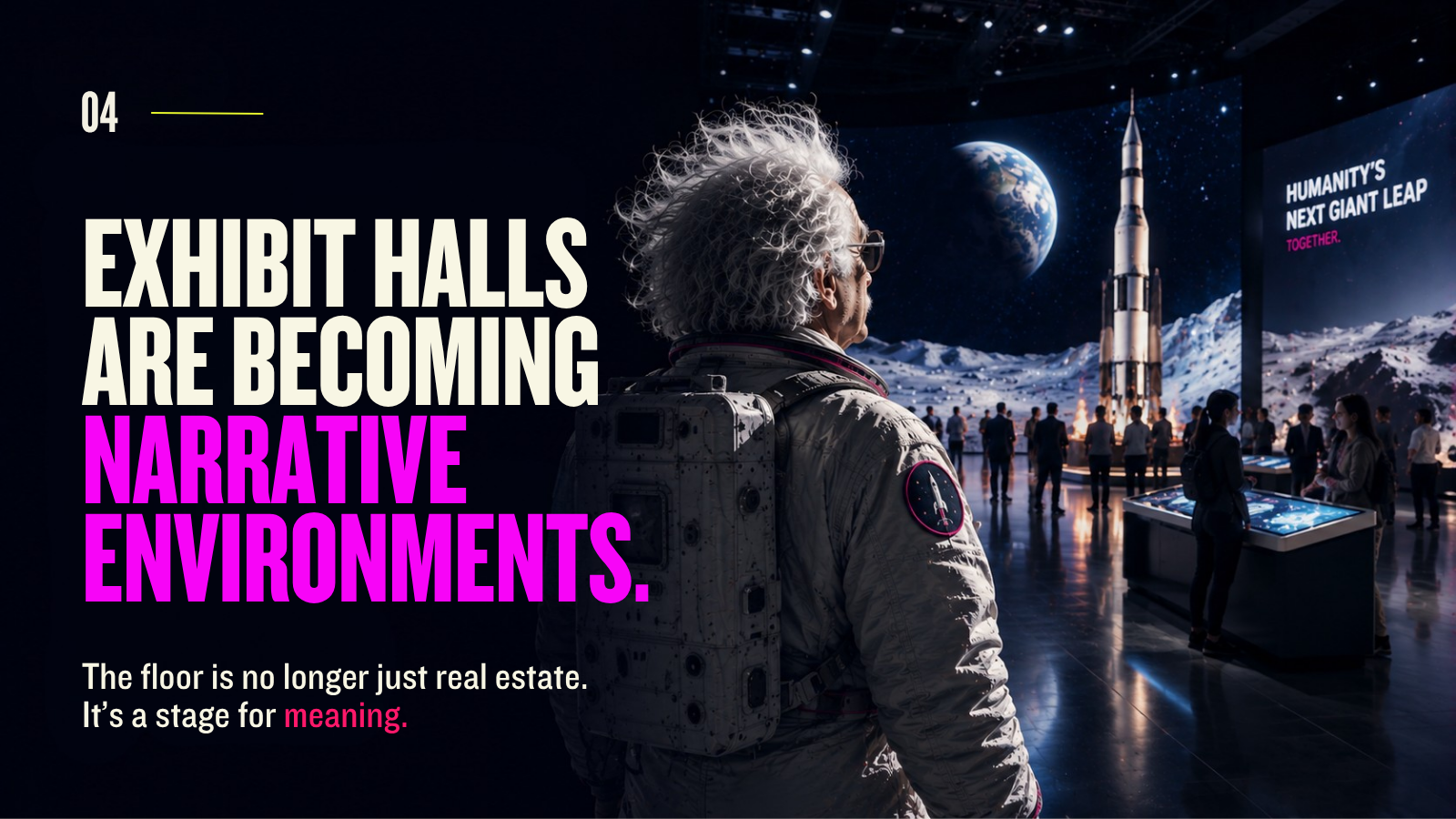
The best booths weren't necessarily the biggest (but Lockheed, you nailed it).
They were the clearest.
The ones with conviction.
With personality.
With an actual point of view.
People remember how you made them feel.
And honestly? Watching aerospace executives and engineers from NASA spend ten minutes building astronaut minifigures reminded us that wonder is still one of the most underrated forces in marketing.
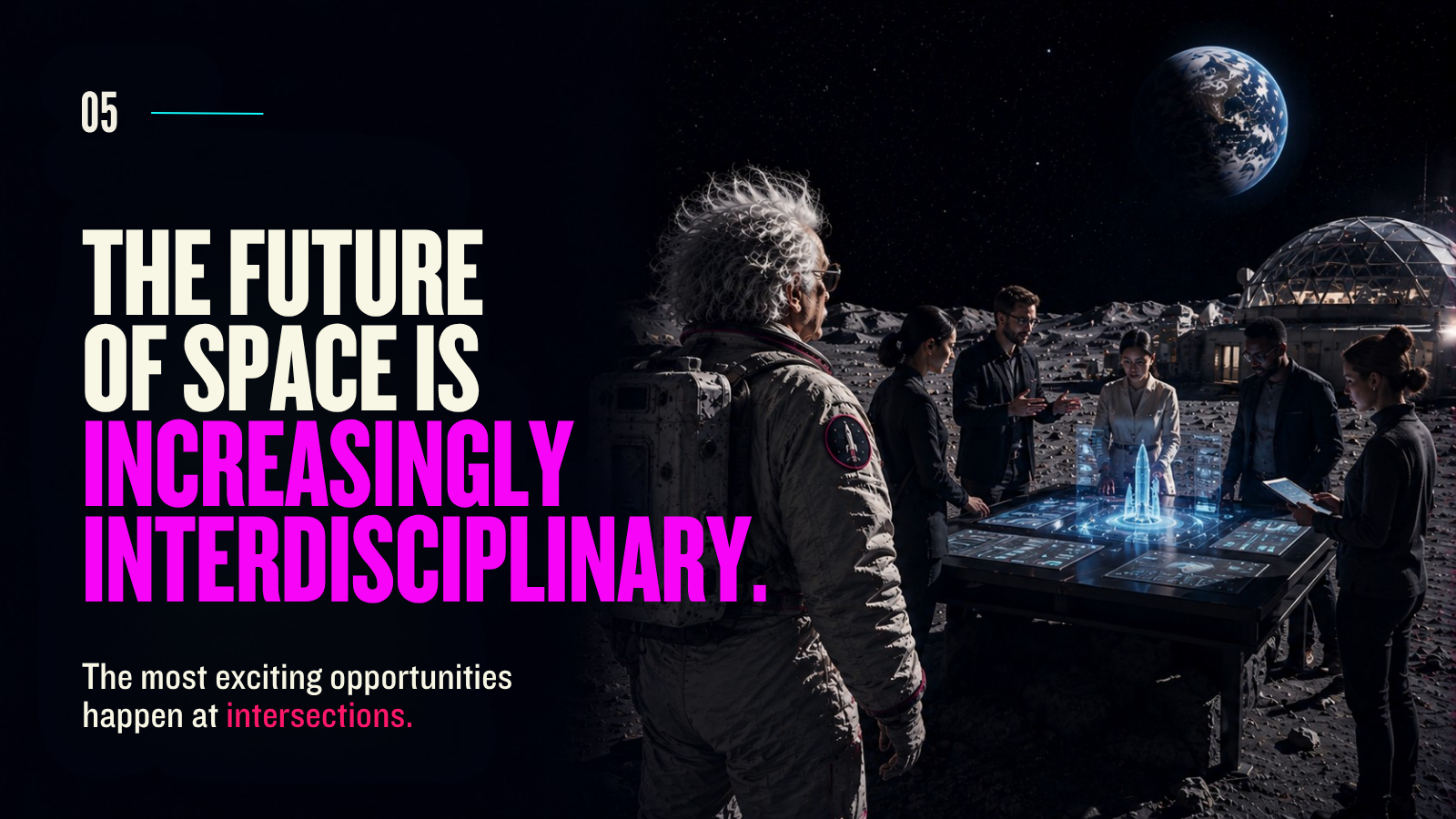
One of the most exciting things about ASCEND this year was how intentionally cross-sector the conversations felt.
Defense.
Commercial space.
Universities.
Manufacturing.
AI.
Life sciences.
Policy.
National security.
Economic development.
The boundaries are dissolving. And that's where the most interesting stories are emerging.
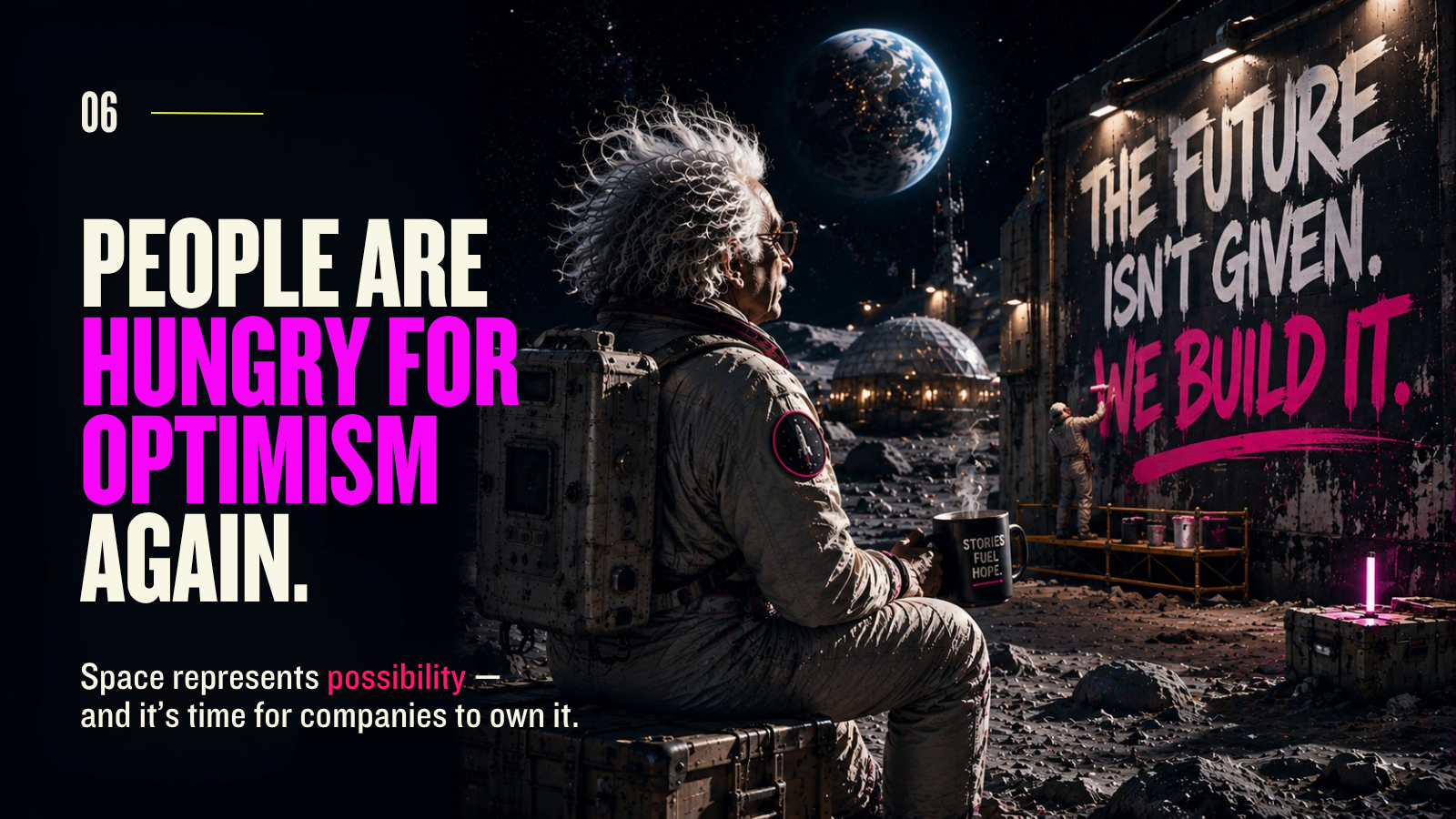
Not hype.
Not empty futurism.
Real optimism rooted in capability.
The room felt different this year — less “someday.” More “we’re actively building this now.”
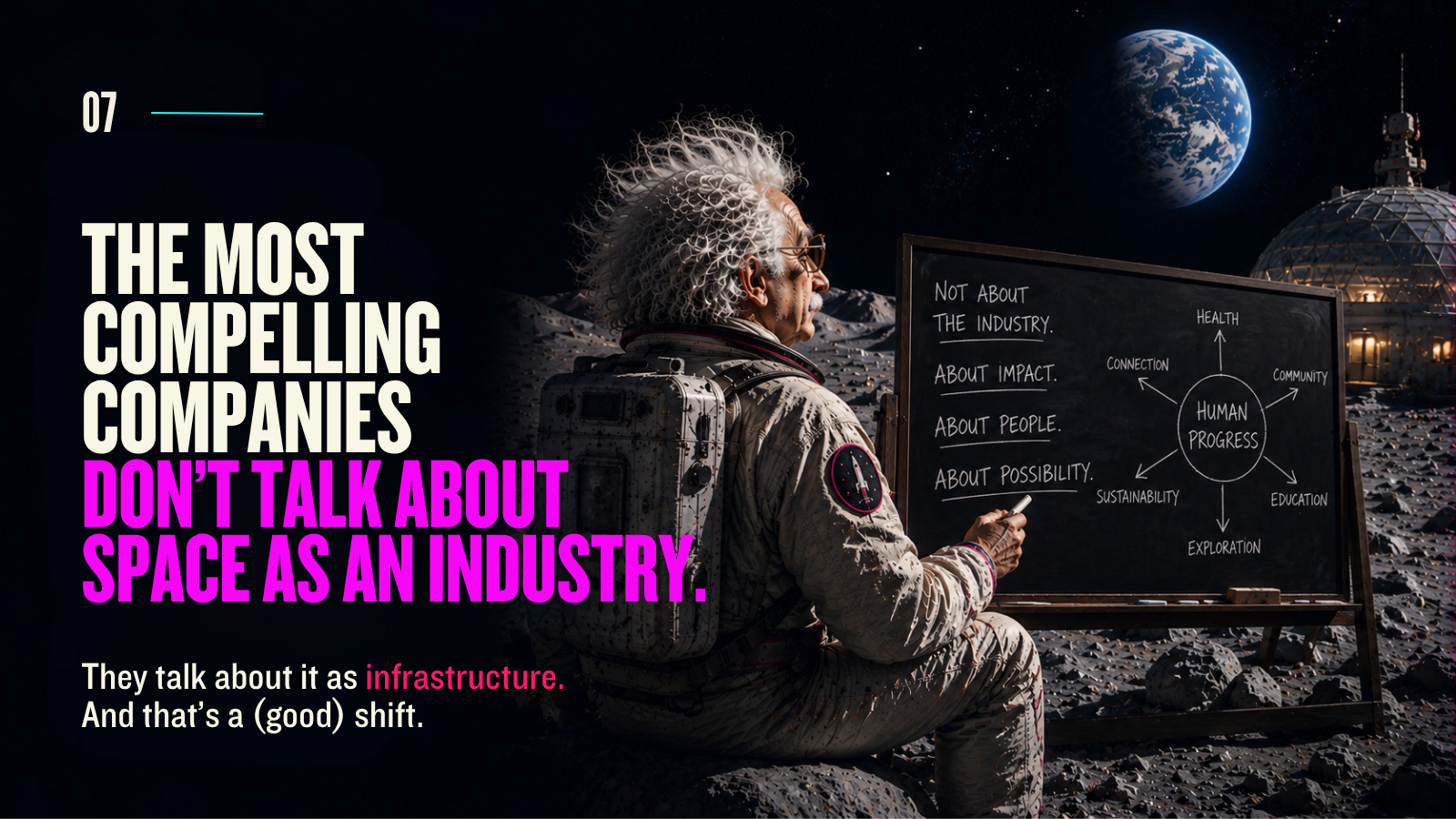
The most compelling conversations weren't really about rockets. They were about what becomes possible because of space.
Persistent global communications.
Precision agriculture.
Climate monitoring.
Supply chain resilience.
Advanced manufacturing in microgravity.
Faster disaster response.
National security.
Navigation.
Biomedical research.
Materials science.
Autonomous systems.
Global connectivity.
Energy resilience.
Real-time Earth observation.
Orbital logistics.
The next generation of computing and sensing.
The companies generating the most excitement weren't positioning themselves as “space companies.” They were positioning themselves as builders of the systems that modern civilization increasingly depends on.
That's a massive storytelling shift.
Because the future audience for this industry is not just aerospace insiders.
It's governors.
Investors.
Defense leaders.
Hospital systems.
Universities.
Manufacturers.
Developers.
Parents.
Students.
The public.
And the organizations that can explain how their work changes life on Earth — not just activity in orbit — are going to have an enormous advantage.
That's not an insult.
It's just a different discipline.
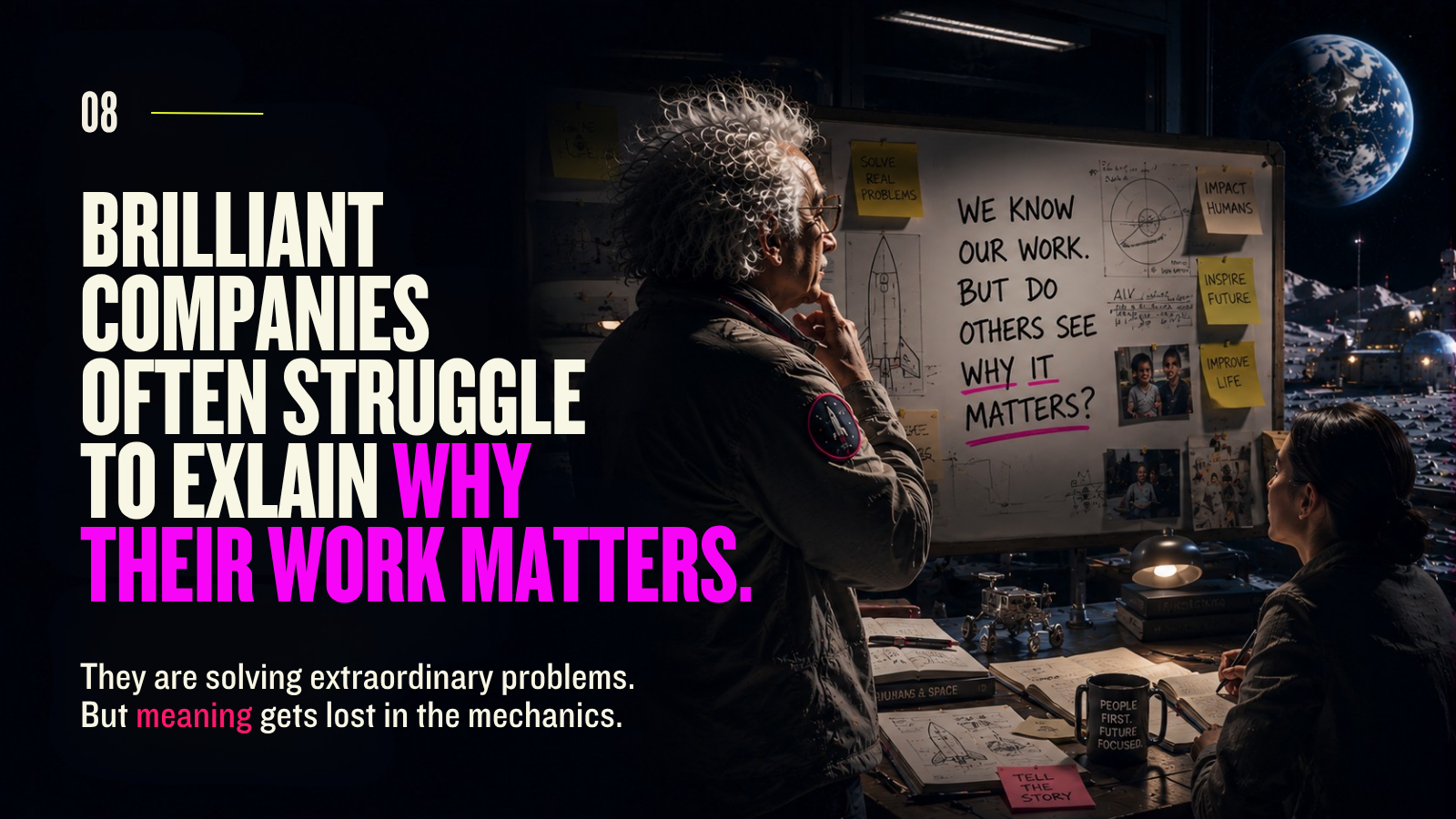
Most deep-tech organizations are filled with brilliant people who have spent years learning how to build impossible things. Very few have been taught how to communicate those ideas in a way that creates momentum outside their immediate technical audience.
That gap is exactly why Snowclone exists.
This industry still feels early.
Still feels unfinished.
Still feels like infrastructure being poured in real time.
Which makes this moment incredibly important. Because the organizations defining the narrative now may define the category later.
Snowclone was built for organizations working at the edge of what's next.
Space.
Quantum.
AI.
Advanced manufacturing.
Frontier technology.
Industries where the technology moves faster than the public understanding of it.
So thank you.
Thank you for stopping by the booth.
For talking with us.
For geeking out over Star Trek.
For building astronaut minifigures with us.
For sharing what you're building.
For trusting us with your stories.
We made a lot of new friends this week. And we have a feeling this is just the beginning.
